Built through experience. Driven by service.

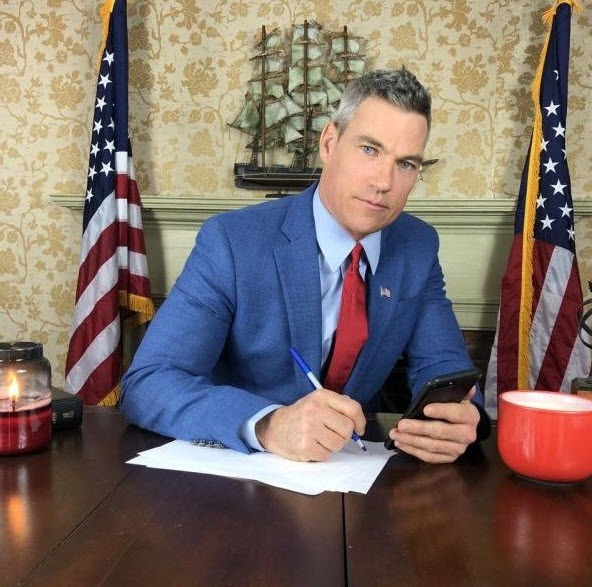
Hart Cunningham’s life and work have crossed entrepreneurship, technology, creativity, humanitarian engagement, environmental advocacy, and public service.

Hart Cunningham
Entrepreneur Technology, systems, and organizational leadership
Humanitarian Focused on dignity, opportunity, and public service
Environmentalist Protecting the systems people and the planet depend on

Listening first. Acting with purpose.

Hart 2028 begins with a straightforward belief: public service should start with the people closest to the challenges. The campaign is focused on turning lived experience into clear priorities, practical action, and leadership people can trust.

Community first

Every priority starts with the people, families, workers, and neighborhoods affected most.

Service always

Leadership means showing up, listening carefully, and remaining accountable to the work.

Real progress

Clear goals, practical solutions, and measurable results should guide the path forward.

Better leadership starts with trust.

Trust is earned through clarity, consistency, accessibility, and a willingness to focus on the causes that shape everyday life.

Listen to people

Good policy starts with real stories from families, workers, seniors, students, veterans, small businesses, and local leaders.

Focus on causes

The campaign organizes its work around clear issue areas so people understand what the movement stands for and where it intends to act.

Build participation

Supporters should have meaningful ways to volunteer, share their experiences, organize locally, contribute, and help move the work forward.

A life shaped by movement, discipline, and ideas.

Hart’s background spans different countries, disciplines, industries, and forms of creative and public work.

Family and early life

Hart Cunningham was born in Memphis, Tennessee into a family shaped by art, civic struggle, and public service. His father, Jere Cunningham, was a painter, writer, and civil rights activist who participated in the Memphis sanitation workers’ strike and opposed the Vietnam War.

His mother, Madelyn Cunningham, was a novelist and writer whose work focused on human experience, memory, and narrative. Her passing became a defining personal loss that deepened Hart’s long-term focus on meaning, responsibility, and service.

Hart’s early life was defined by movement across cultures and environments. He lived in Dominica during childhood, later in Nova Scotia, and eventually in California. These experiences exposed him to different social and economic systems while grounding him in hands-on creative work, including carpentry, building, and construction taught by his father.

Learning across disciplines

From a young age, Hart developed across several disciplines at once. At eight, he learned chess while traveling with his mother, building early strategic thinking. At thirteen, he competed internationally in soccer as part of a U.S. youth national program in Europe.

At fourteen, he represented the United States in mathematics competitions in Hong Kong. By sixteen, he was a published writer and poet.

Hart attended both Pitzer College and Pomona College within the Claremont Colleges system, pursuing a multidisciplinary education spanning liberal arts, systems thinking, economics, and applied reasoning. He later completed a master’s degree at Claremont at age 22 while continuing advanced graduate-level study focused on governance systems, technology, and how institutions shape human behavior.

Creative work

Hart’s early career moved into entrepreneurship in the technology sector, where he founded and led companies focused on systems design, incentives, and large-scale behavioral dynamics.

Over time, he became a three-time Ernst & Young Entrepreneur of the Year finalist recipient, reflecting sustained recognition in innovation and leadership.

Alongside his professional work, Hart developed a creative practice under the name Ryderman, producing motivational music centered on discipline, resilience, and transformation.

He maintains a long-term yoga practice as part of his physical and mental discipline. He is an animal lover and lives with three cats.

Faith and public life

Hart identifies as Presbyterian while strongly supporting a complete separation between religion and government, viewing faith as personal rather than institutional.

His approach to public service is grounded in the belief that leadership should be accessible, accountable, and connected to the everyday concerns of the people it serves.

Systems should serve human beings and sustain the natural world they depend on.

That belief connects Hart’s work across entrepreneurship, environmental advocacy, humanitarian engagement, technology, and public service.

The work ahead.

Humanitarian and environmental focus

A central theme in Hart’s life is the belief that modern systems must evolve to protect both people and the planet. His worldview is shaped by the conviction that economic systems, technological acceleration, and environmental degradation are deeply interconnected.

He is a humanitarian in practice and orientation, focused on how large-scale systems affect the lived experience of ordinary people, particularly in terms of stability, dignity, and opportunity.

His approach emphasizes direct engagement with individuals and attention to how abstract policy translates into real-world pressure or possibility.

He is also an environmentalist, grounded in the belief that ecological stability is inseparable from human survival and economic fairness.

He views the defining challenge of the 21st century as the convergence of climate stress, technological acceleration, and widening inequality—forces that require systemic adaptation rather than incremental adjustment.

Political activity

Hart began developing his presidential campaign in 2018, which evolved into his declared 2020 run. His campaign focused on long-form public communication and policy development through extensive video-based outreach.

He continued political engagement into subsequent election cycles, including efforts aligned with the 2024 race, and has remained committed to a long-term trajectory toward 2028.

Across these efforts, his focus has remained consistent: systems-level reform driven by direct human experience, with an emphasis on restoring agency, accountability, and livability in both economic and environmental systems.

Core mission

Across entrepreneurship, creative work, education, and public engagement, Hart’s work centers on a single unifying idea: systems must be designed to serve human beings and sustain the natural world they depend on.

His mission is rooted in the belief that the future will be defined not only by technological capability or economic output, but by whether societies can align innovation with human dignity and ecological stability.

In that sense, his work is not only about reform, but about adaptation—ensuring that modern systems remain compatible with both people and the planet in an era of accelerating change.

Help build the next chapter.

Volunteer, host a conversation, share your story, follow the campaign, or support the work behind Hart 2028.